Blessed is the one who finds wisdom, and the one who gets understanding, for the gain from her is better than gain from silver and her profit better than gold.
Proverbs 3:13-14
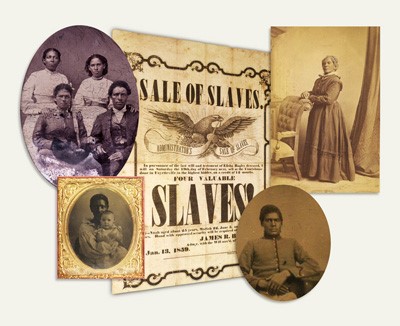
My ancestors owned slaves.
It is an uncomfortable truth that has nothing to do with my lived experience. Yet it is my heritage, unknown to me for most of my life.
I want to believe these forebearers were kind masters. That they treated their few slaves as workers rather than property. Even so, there is no getting around the fact that they were the masters. These God-fearing Christians somehow thought it was ok, even necessary, to own other people.
When they died, they included these enslaved people by name in their wills. Slaves were handed down to the owner’s wives and children along with household goods and livestock. In Tennessee in 1795, my ancestor Edmund Williams wrote: “I give to my daughter Levina or the heirs of her body lawfully begotten one negro girl named Delila. I give to my daughter Triphena or the heirs of her body lawfully begotten one negro girl named Chain, one horse or mare, saddle and bridle of the value of eighty-three dollars, one cow and calf or yearling.”
Williams was a prominent citizen, a magistrate who owned 9 slaves and a sizeable piece of property. His family later donated some of his land, where slaves had toiled, to establish a Christian university just after the Civil War in 1866.
Another ancestor in South Carolina also disposed of slaves in his will in 1813: “I give my Plantation and tract of Land on which I now live, my two Negroes, Jack and Jinny, my two Grey Horses, my Cattle, sheep, hogs, Plantation tools, Household and Kitchen furniture to my wife.” If you read it too quickly, you might mistake Jack and Jinny for the two grey horses.
My ancestors owned slaves.
The reality of this hurts my soul. I didn’t have anything to do with it. Still my family – because they needed free labor to prosper — contributed to the idea that some of us were better than, more deserving than others. It is a belief that has permeated our nation throughout history. More subtle in its expression, it is an idea that persists.
Slavery was a thorny political issue from our nation’s earliest days. Our founding fathers argued about it as they drafted the Constitution. Slaves helped build our nascent economy, our monuments, and even our Capitol. But the nation wasn’t entirely willing to allow people with dark skin to share in the nation they helped strengthen. Even after Emancipation, we couldn’t bring ourselves to include “those people” into the inner sanctum of a free democratic society.
Descendants of the people my family owned didn’t get a chance to invest in their futures for a long time. Who knows if they ever caught up. Some of my family wasn’t much better off. My lineage includes generations of people who worked very hard for what little they had.
We fought on both sides of the Civil War. In at least one case, the Civil War tore my Missouri family in half just as it ripped the nation in two. Literally, brother against brother fighting on opposite sides of the issue.
Today, our nation still seems divided over the idea that all men are created equal. There has been a heated debate in our nation about how we reckon with the past. Do we acknowledge it? Do we teach it? How do we speak of it? Some say we shouldn’t.
I am not entirely sure what to do with the truth about my own family. It seems – at the very least — I should acknowledge it. Maybe, if we all spoke the uncomfortable parts out loud, we could begin mending the raw, ragged tears in our national psyche. This is how the word is passed, said a descendant of Monticello’s enslaved community.
We have to start somewhere.
My chains are gone
Amazing Grace (My Chains Are Gone)
I’ve been set free
My God, my Savior has ransomed me
And like a flood, His mercy rains
Unending love, Amazing grace. “
This post may seem out of place in this space. But I believe grace and healing can come from acknowledging unpleasant truths. John Newton, the former slaver and author of one of the best-known hymns “Amazing Grace, called it “humiliating reflection”. Grace is given by God, not because we deserve it, but because he wants us to have it. God certainly doesn’t want us to keep repeating past misdeeds.
 SMALL MOMENTS FULL OF GRACE